Introduction
Eleven months. That number alone tells you something odd is happening with Indian rental agreements, and most tenants and landlords never ask why. It’s mostly about avoiding compulsory registration — but that’s just one small detail in a much bigger picture. Getting the rent agreement format India courts will actually uphold matters far more than most people realise, especially when a dispute eventually shows up.
Why the Rent Agreement Actually Matters
A rent agreement isn’t just a formality for the landlord’s records. It’s the primary evidence in disputes over deposits, maintenance responsibilities, notice periods, and eviction — and a poorly drafted one leaves both sides guessing.
Quick answer: A valid rent agreement in India should clearly state rent amount, deposit terms, duration, maintenance responsibilities, and termination clauses, and should be executed on appropriate stamp paper — registered if the tenancy exceeds 11 months to avoid future evidentiary disputes.
Why 11-Month Agreements Are So Common
Rental agreements for 11 months avoid mandatory registration under the Registration Act, 1908, which requires registration for leases of 12 months or more. It saves both parties registration fees and stamp duty, and most landlords simply renew it every 11 months rather than deal with the longer process.
I get why it’s popular, but it’s worth knowing this isn’t some legal loophole — it’s a genuine, accepted practice, just one that occasionally confuses first-time tenants who assume something’s off about it.
Essential Clauses Every Rent Agreement Needs
- Parties and property description — full names, addresses, and a precise description of the rented property
- Rent amount and due date — including how and when payment should be made, and any late payment penalty
- Security deposit terms — amount, and clearly, the conditions for deductions and refund timeline
- Duration and renewal terms — start date, end date, and whether renewal is automatic or requires fresh agreement
- Maintenance responsibilities — who pays for what, society charges, minor repairs versus major structural repairs
- Notice period for termination — typically 1-3 months, agreed by both parties
- Restrictions on use — residential versus commercial use, subletting permissions
- Utility bill responsibilities — electricity, water, gas connections
Security Deposit: What the Law Says
Quick answer: There’s no single national cap on security deposits in India, though several states have introduced model tenancy laws limiting it to a specified number of months’ rent (often 2 months for residential and up to 6 for commercial) — always check your specific state’s tenancy regulations.
Stamp Duty and Registration
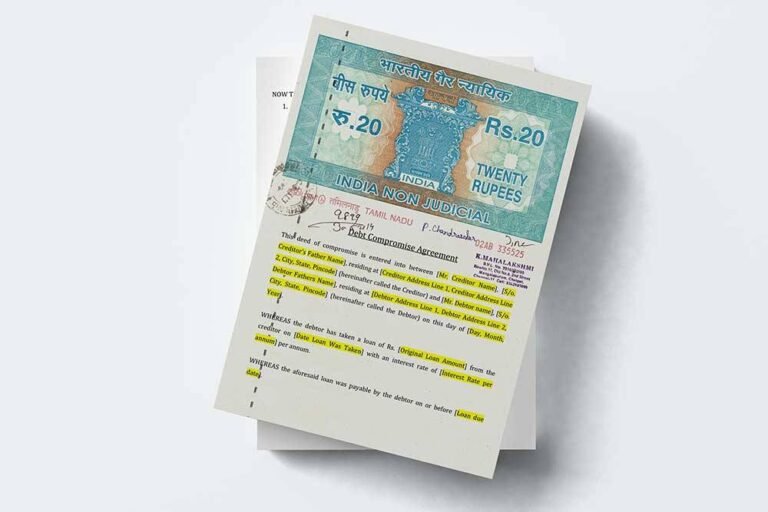
Stamp duty on rent agreements varies by state and is usually calculated based on rent amount and deposit combined. In Rajasthan, stamp duty for residential leases is relatively modest for short-term agreements, but always executed on non-judicial stamp paper of the correct value to avoid the document being deemed inadmissible in court later.
What Happens If There’s No Written Agreement?
Verbal tenancy arrangements aren’t illegal, but they’re a nightmare to prove in a dispute. Without a written agreement, questions like “what was the agreed notice period” or “was the deposit meant to be fully refundable” become he-said-she-said situations that courts genuinely struggle to resolve fairly.
[link to related guide on power of attorney drafting here]
Common Disputes and How Good Clauses Prevent Them
- Deposit deductions: Clearly specify what counts as normal wear and tear versus tenant damage
- Early termination: Specify the notice period and any penalty for breaking the lease early
- Maintenance disputes: Separate structural repairs (landlord’s responsibility) from day-to-day upkeep (tenant’s responsibility)
Picture a tenant who moves out after 8 months of an 11-month lease, and the landlord refuses to return the deposit citing “loss of rent.” A clear early-termination clause, agreed upfront, would’ve settled this in five minutes instead of an ugly argument.
[link to related guide on property document verification before renting or buying here]
FAQ
Why are most rent agreements in India for 11 months? To avoid mandatory registration requirements under the Registration Act, which apply to leases of 12 months or longer, saving both parties time and registration costs.
Is a rent agreement legally valid without registration? An unregistered rent agreement for under 12 months, executed on proper stamp paper, is generally valid, though registered agreements carry stronger evidentiary weight in disputes.
What is a reasonable security deposit for rented property in India? It varies by state and city, though several states cap it around 2 months’ rent for residential properties under their model tenancy laws.
Can a landlord increase rent mid-agreement? No, not unless the agreement specifically allows for a rent revision clause during the tenancy period.
What should a tenant check before signing a rent agreement? Ownership proof of the property, clarity on deposit refund terms, maintenance responsibilities, and the exact notice period for termination.
Conclusion
A clean rent agreement format India disputes rarely arise from isn’t complicated — it just needs the right clauses covering deposit, maintenance, and termination in plain, specific language. Whether you’re a landlord or tenant, don’t rely on a generic template pulled off the internet without checking it matches your state’s stamp duty rules and actual arrangement. The five minutes it takes to add a missing clause now can save months of dispute later.