Introduction
Every April, admission season rolls around, and every year the same confusion pops up in parent WhatsApp groups: “Can private schools really refuse my child under RTE?” Honestly, most parents have heard of the law but never actually read what it says. This is the RTE Act 2009 explained the way it should’ve been explained to begin with — plainly, without the legislative jargon.
What Is the RTE Act, 2009?
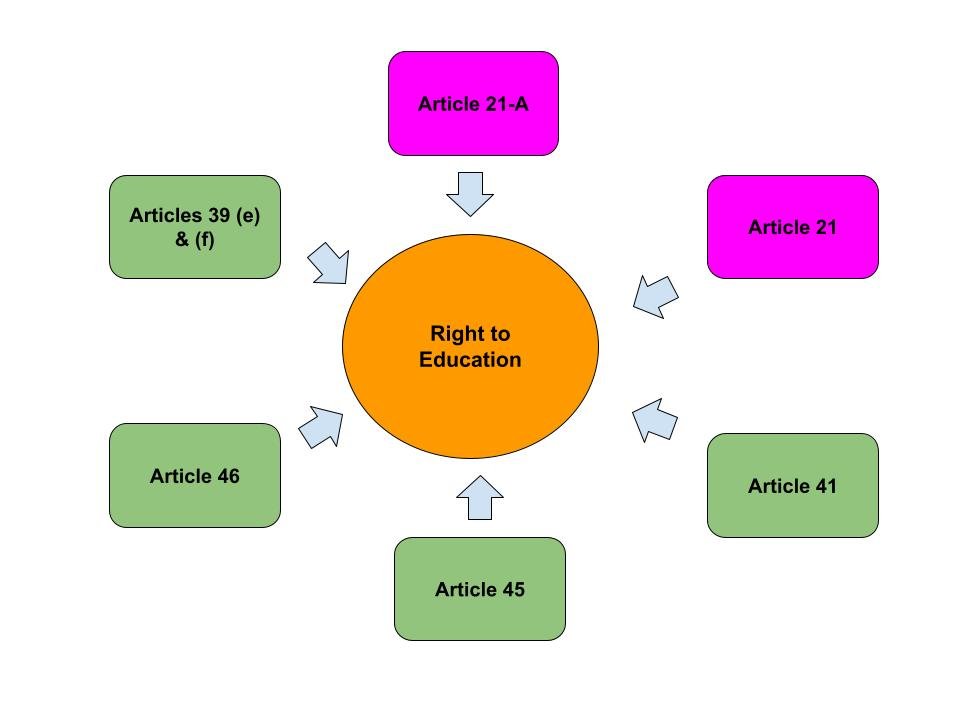
The Right of Children to Free and Compulsory Education Act, 2009, commonly called the RTE Act, guarantees free and compulsory education to every child between 6 and 14 years of age in India. It came into force on 1 April 2010, giving legal force to what Article 21-A of the Constitution promises.
Quick answer: The RTE Act, 2009 guarantees free and compulsory elementary education to every child aged 6-14 in India, requires private unaided schools to reserve 25% of seats for disadvantaged children, and sets minimum infrastructure standards for all schools.
Who Does the RTE Act Cover?
The Act applies to:
- Every child aged 6-14, regardless of gender, caste, or economic background
- Children with disabilities, under a broader definition aligned with the RPWD Act
- Migrant children, who often get left out of school enrollment drives entirely
The 25% Reservation Rule
This is probably the most talked-about part of the Act. Private unaided schools must reserve at least 25% of entry-level seats for children from economically weaker sections (EWS) and disadvantaged groups. The government reimburses the school for these seats, either at the actual fee or a state-fixed amount, whichever is lower.
I’ll be honest — implementation of this varies wildly state to state. Rajasthan has a reasonably functional online portal for EWS admissions, but I’ve heard from parents in other states where the process is genuinely painful, with reimbursements delayed for months.
No-Detention Policy: What Changed
Originally, the RTE Act had a “no detention” policy up to Class 8 — meaning no child could be failed or expelled regardless of academic performance. This was later amended in 2019, allowing states to decide whether to hold back students in Classes 5 and 8 based on exam performance, with a re-exam opportunity first.
Infrastructure and Teacher Norms Under RTE
Schools recognised under RTE must meet minimum standards:
- Pupil-Teacher Ratio (PTR) not exceeding 30:1 at the primary level
- Adequate classrooms, drinking water, and separate toilets for boys and girls
- Trained teachers meeting minimum qualification norms set by the NCTE
Schools failing these standards risk losing recognition — though enforcement, again, is inconsistent depending on the state education department’s diligence.
Can a School Refuse Admission Under RTE?
Quick answer: No, a school cannot refuse admission to a child eligible under the RTE quota, cannot charge capitation fees, and cannot conduct entrance tests or interviews for admission at the entry level.
If a school does refuse, parents can file a complaint with the district education officer or the State Commission for Protection of Child Rights (SCPCR).
What Documents Are Needed for EWS/RTE Admission?
- Income certificate proving EWS status (issued by the competent authority)
- Caste certificate, if applying under a specific disadvantaged category
- Birth certificate or age proof
- Address proof, usually within the school’s catchment area
[link to related guide on legal rights of students against ragging here]
Common Problems Parents Face
- Schools quietly discouraging RTE admissions by claiming seats are “full” even when they aren’t
- Reimbursement delays leaving schools reluctant to admit more RTE students the following year
- Lack of awareness among parents about the online application windows, which are often open for a narrow time each year
Has your child’s school ever given you a vague “no seats” answer without any written proof? That’s actually a red flag worth escalating.
[link to related guide on how to file a civil suit for rights violations here]
FAQ
What age group does the RTE Act cover? Children between 6 and 14 years of age, corresponding to elementary education from Class 1 to Class 8.
Is RTE admission only for government schools? No, private unaided schools are also required to reserve 25% of entry-level seats for economically weaker and disadvantaged children under RTE.
Can a private school charge fees for RTE quota seats? No, education under the RTE quota must be free, and the government reimburses the school separately.
What can parents do if a school refuses RTE admission? They can file a written complaint with the district education officer or approach the State Commission for Protection of Child Rights.
Does the no-detention policy still apply under RTE? It was amended in 2019 — states can now choose to hold back students in Classes 5 and 8 based on exam results, after giving a chance for re-examination.
Conclusion
The RTE Act 2009 explained properly shows it’s a genuinely powerful law on paper — free education, mandatory reservation, infrastructure standards. The gap, as with a lot of Indian legislation, is implementation. Parents who know their rights under this Act tend to get better outcomes than those who simply accept a school’s word that “seats are full.” If you’re navigating an RTE admission this year, keep every communication in writing — it makes a real difference if you need to escalate later.