Introduction
Walk into most Indian hospitals, and patients rarely ask questions — they just follow instructions. Part of that is trust, sure, but part of it is simply not knowing that patient rights in India actually exist in a fairly detailed, enforceable form. I’ve noticed even educated people assume “rights” here means nothing more than a vague right to treatment. It’s a lot more specific than that.
The Legal Basis for Patient Rights
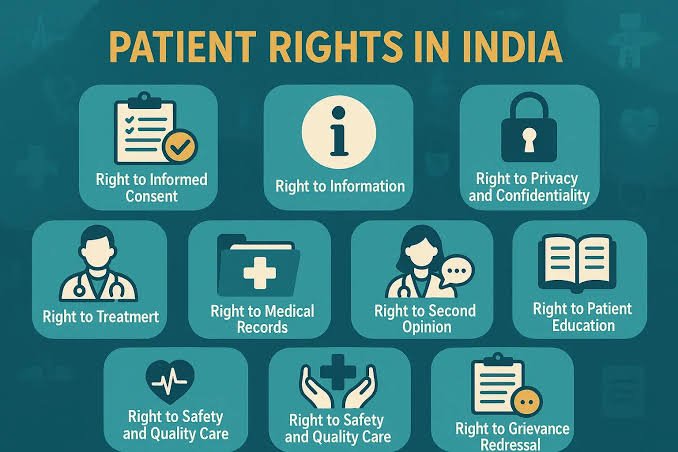
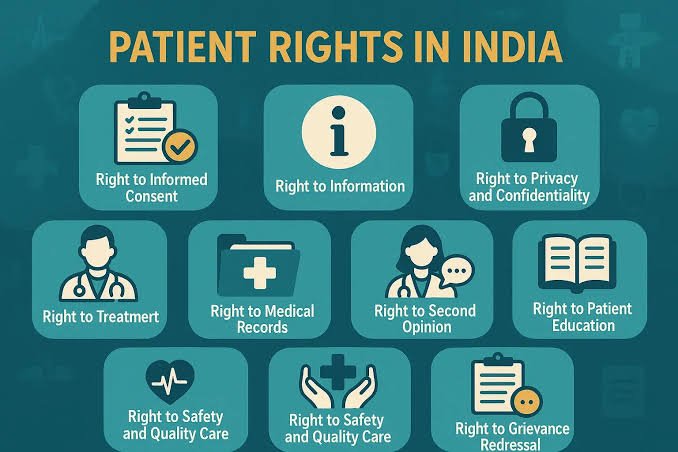
Patient rights in India draw from multiple sources — the Consumer Protection Act, 2019 (which covers medical services), the Indian Medical Council (Professional Conduct) Regulations, 2002, and importantly, the Charter of Patients’ Rights released by the National Human Rights Commission in 2018 (later notified more formally by the Ministry of Health).
Quick answer: Patient rights in India include the right to informed consent, access to medical records, emergency treatment regardless of ability to pay, confidentiality, and the right to seek a second opinion — enforceable through consumer forums and medical councils.
Right to Informed Consent
No procedure, surgery, or significant treatment can legally proceed without the patient’s informed consent — meaning the patient (or guardian, for minors) understands the risks, alternatives, and expected outcomes before agreeing.
I’ve reviewed cases where consent forms were signed in a rush, without real explanation, right before a procedure. That’s not valid informed consent in the true legal sense, even if a signature exists on paper.
Right to Access Medical Records
Patients (or their authorised representatives) have the right to access their own medical records, including test reports, discharge summaries, and case papers, usually within 72 hours of a written request under most state medical council regulations.
Right to Emergency Medical Treatment
Quick answer: Under Indian law, no hospital — private or government — can refuse emergency medical treatment to a patient citing inability to pay or lack of police clearance in medico-legal cases, as reaffirmed by the Supreme Court in Paramanand Katara v. Union of India (1989).
This one genuinely matters in road accident cases, where hospitals sometimes hesitate over medico-legal formalities before treating the patient. That hesitation, legally, shouldn’t delay emergency care.
Right to Confidentiality
A patient’s medical information is confidential, and disclosure without consent — except in specific legally mandated situations like certain communicable diseases — can amount to a breach of medical ethics and potentially legal liability.
Right to a Second Opinion
Patients have every right to seek a second medical opinion without the treating doctor obstructing access to relevant records for that purpose. Some doctors, understandably or not, get a bit defensive about this — but it’s a legitimate right, not a challenge to their competence.
Right to Choose or Refuse Treatment
An adult patient with decision-making capacity can refuse treatment, even life-saving treatment, except in specific situations involving public health risks (like certain infectious diseases) or where the patient lacks capacity to decide.
[link to related guide on medical negligence complaints in India here]
How to Enforce Patient Rights When They’re Violated
- Raise the issue directly with the hospital’s grievance redressal cell first
- File a complaint with the State Medical Council against the specific doctor, if applicable
- Approach the Consumer Disputes Redressal Commission for deficiency in service
- In serious cases involving criminal negligence, a police complaint may also be warranted
[link to related guide on legal documents for medical consent here]
FAQ
Can a hospital refuse treatment for lack of payment in an emergency? No, emergency treatment cannot be denied over payment issues; the Supreme Court has been clear on this in multiple rulings.
Do patients have a right to their own medical records in India? Yes, patients can request and access their medical records, and hospitals are generally required to provide them within a specified time frame, often 72 hours.
Is informed consent required before every medical procedure? Yes, for any significant procedure or surgery, informed consent explaining risks and alternatives is legally required, not just a signature on a form.
Can a patient seek a second opinion without upsetting the treatment process? Yes, this is a recognised right, and doctors are expected to cooperate by sharing relevant records for this purpose.
Where can a patient complain if their rights are violated? Through the hospital’s grievance cell, the State Medical Council, consumer forums, or police in cases involving criminal negligence.
Conclusion
Most patients don’t assert their rights simply because they don’t know these rights exist in this much detail — informed consent, record access, emergency care, confidentiality. Knowing patient rights in India doesn’t mean distrusting your doctor; it means engaging with your own treatment as an informed participant rather than a passive recipient. Next time you’re in a hospital and something feels rushed or unclear, it’s completely fair to ask questions and expect real answers.